

Soundproofing and acoustic treatment for a rehearsal room
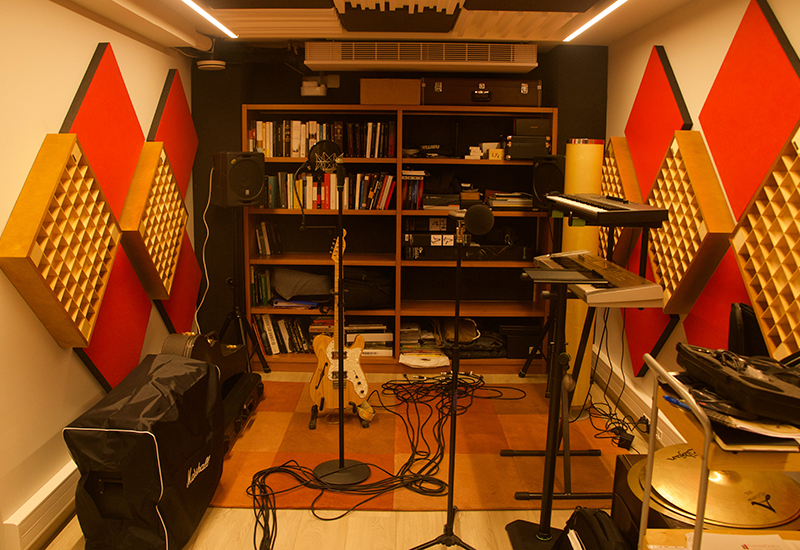
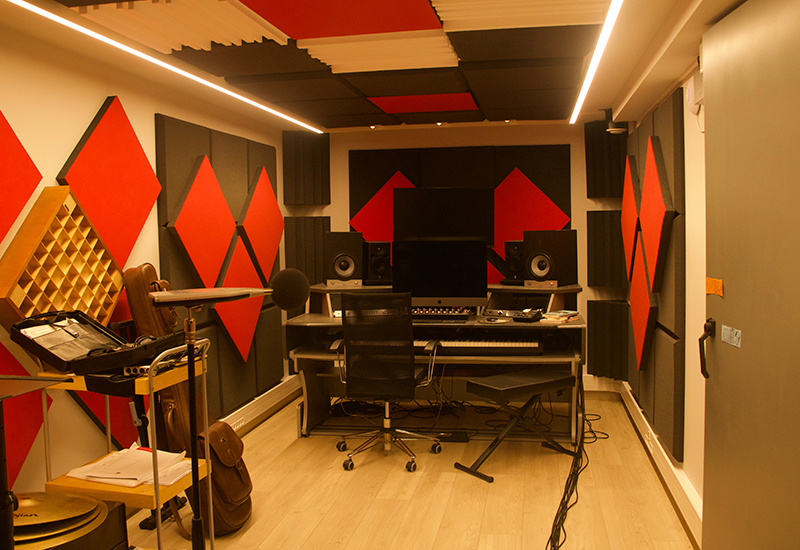
We also show you the acoustic conditioning chosen by Oscar, both in the preliminary 3D rendering and in its final real appearance.
The home studio—or home recording and production studio—is a resource that has experienced inexorable growth over the years. A proper acoustic treatment comprising a meticulous selection of acoustic panels, bass traps, diffusers, and resonators, combined with high-grade music production and recording equipment, represents a minimal investment today compared to the costs such a project entailed years ago.
Regarding acoustic isolation, it is worth noting that if we can additionally soundproof the room, all the better. However, this is not always feasible. In such cases, we can focus exclusively on acoustic treatment, tailored perhaps in a more customized manner. Ultimately, we are dealing with our own Home Studio.
Many clients ask us how to soundproof a room and, while they are at it, which acoustic panels to use to achieve proper acoustic conditioning that allows them to produce, play, or record their music under optimal conditions—without disturbing their neighbors or their own family in the process.
A client from Barcelona contacted us to outline his acoustic project idea and main concerns. The objective was to be able to produce music or rehearse with his band at any time, all within a limited space inside the garage of his new passive house, which features a shared HVAC and air renewal system for the entire single-family dwelling.
Let us show you the steps taken and the acoustic insulation materials used (silentblocks, acoustic doors, metal framing, boards, plasterboard panels, sound-absorbing panels, acoustic isolators, etc.) to soundproof the room, along with the obtained results. But first, be sure to watch this short video to visually understand the acoustic isolation process of a studio with demanding performance requirements.
We can also display several images of the insulation process, showing the acoustic reinforcement of a wall following the analysis of the acoustic measurement results, the construction of the dry floating floor, the framing of the four perimeter walls erected over the new floating floor to enclose the room, and the new suspended ceiling decoupled from the original structure. Finally, we present the sound insulation data achieved along with the reverberation time graph following the acoustic conditioning.
I have come to make acoustic recording productions with *microphony with a very professional quality, even though I never thought it could become a professional recording studio.
Since 2005
Acoustic Specialists
Contact us without obligation for any type of installation or project