

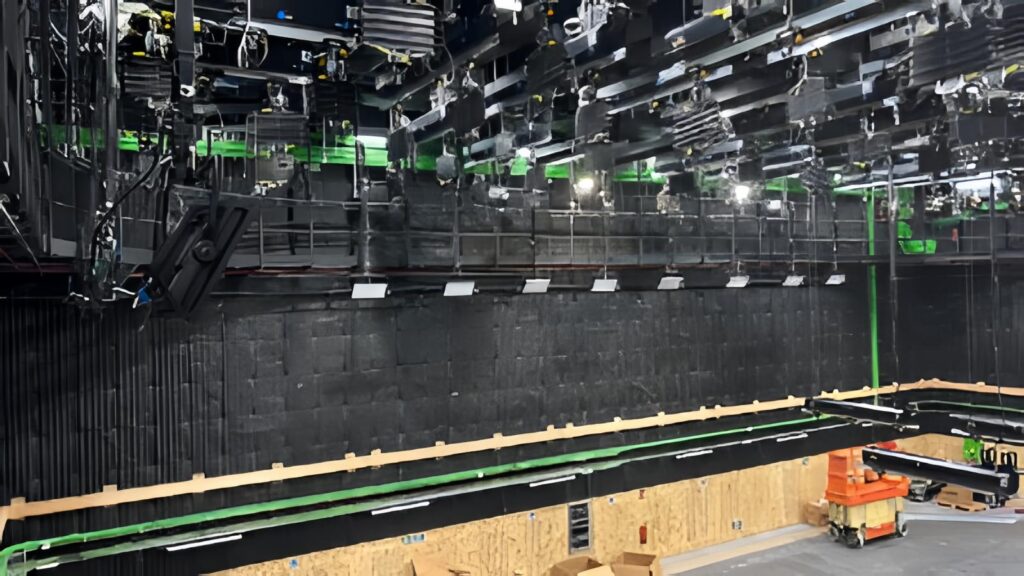
Basics of the acoustic treatment for a TV studio.
Years of experience and the importance of acoustic treatment in TV/filming studios that we have worked on lead us to the following conclusions:
- Large spaces where low frequencies are usually not critical but must still be taken into consideration.
- Constant background levels (lightning, air conditioning, etc.) which, in many cases, result in NC (Noise Criterion) above the desired threshold.
- Versatile spaces that, over time, may host different types of productions such as news, fiction, entertainment, debates, shows, films, and even concerts or other programs with significant sound pressure levels.
- Safety requirements, ensuring that all materials used are durable, long-lasting, non-toxic, officially tested, and fully compliant with all safety standards and certifications.
These conditions and variables make the following requirement essential: every space we treat and condition must be free of sound reflections and must achieve the lowest possible reverberation time across the entire frequency spectrum. This is a common characteristic of the best studios in the world, and we ensure our clients benefit from it.
To achieve this, we will first verify the soundproofing level of the TV set and, if necessary, provide an initial acoustic isolation proposal. From there, we can focus on acoustic absorption, reverberation control, and the resulting improvement in speech intelligibility.
And last but not least, don’t be surprised to find that the best TV and filming studios around the world cover their entire surfaces with specialized acoustic blankets designed specifically for these creative environments. More absorption = shorter reverberation time = greater intelligibility = better sound. However, not all acoustic absorbers are the same. Before explaining this in more detail, let’s introduce the following concepts for context:
Acoustic isolation
Good acoustic isolation on a TV set helps maintain a low Noise Criterion (NC) level inside. It is recommended that it does not exceed 25, which corresponds to a weighted continuous sound level (LAeq) of 35 dB.
Reverberation control
Reverberation control and the improvement of intelligibility are goals we pursue only after assessing the existing reverberation time and comparing it to the room’s air volume in cubic meters, taking into account its intended use. The reverberation time (RT) of a TV set should be around 0.4 seconds for a 300 m² room and up to 0.8 seconds for a 10,000 m³ studio. To achieve an optimal result tailored to the space’s needs, we must carefully select the appropriate acoustic absorption materials and the most suitable installation method. For large spaces, it is especially important to plan the installation process well in advance, as doing so can save significant time and money.

Recommended RT in Function of Room Volume and Type. Jonathan Sheaffer-Prediction and Evaluation of RT Design Criteria-Sep-2007″ (https://www.arauacustica.com/files/publicaciones_relacionados/pdf_esp_23.pdf)
Acoustic absorption
There are many types of suitable acoustic absorption products that provide effective acoustic treatment for a TV or filming stage. In general, they all consist of acoustic blankets of varying quality, designed for easy installation, durability, and safety.
Additionally, in many cases it will be necessary to leave an air gap between the wall and the acoustic absorber or blanket. The size of this gap should vary depending on the target reverberation time, as well as the intended use and volume of the space to be treated. We always recommend including it, as these air gaps not only help improve the building’s sound insulation but also enhance the overall internal acoustics.
Key factors for the acoustic treatment of a TV/filming studio.
Shape and size of the studio
Since studios usually have large dimensions, low frequencies are generally not a major concern, unless the set is used for programs with high sound pressure, such as music shows or performances. In this case, the larger and taller the studio, the better. This also benefits production companies, electrical installers, and set designers, who will all appreciate the extra space.
Materials and surfaces of the studio
Surfaces
Generally, studios have either concrete wall surfaces (of varying thickness) or walls that are already soundproofed and covered with drywall.
To carry out acoustic treatment on concrete surfaces, it is often necessary to fix the acoustic blankets directly to the wall using a compressed air gun and specialized nails, such as Hilti-type anchors. If the budget allows, we recommend placing horizontal wooden battens every 80 to 120 cm. This facilitates the installation of the blankets, enhances absorption, and creates a small air gap that also contributes to sound isolation.
In both cases, it is advisable to use laser levels to ensure proper alignment of the horizontal and vertical fixing points.
Roof coverings
In the case of newer constructions, we will most likely encounter Deck-Type layer roof coverings. In previously treated buildings, such as TV or filming studios, we may find concrete or drywall ceilings. As long as the ceiling allows, we use the same acoustic blankets that were installed on the walls. If the ceiling is too rigid and makes installation difficult, we recommend using acoustic baffles, which can be suspended in a variety of ways, as will be explained in the following section:
Materials for the acoustic treatment of a TV studio
Installation of acoustic pannels
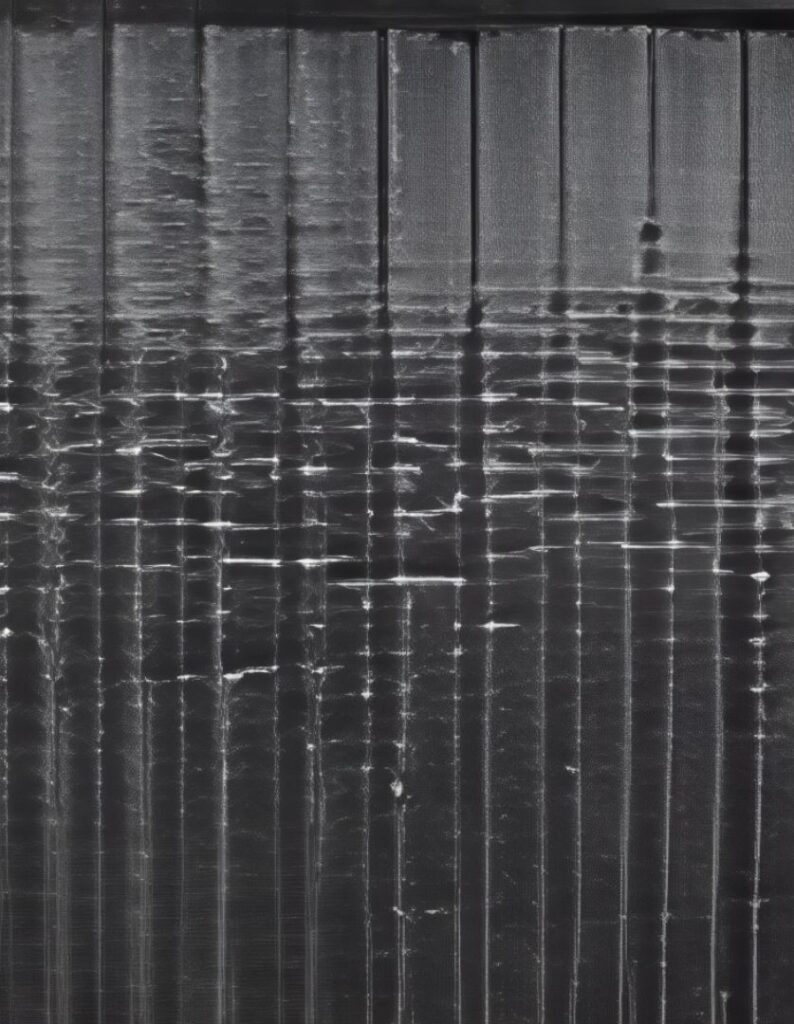
In terms of price, quality, longevity and safety, we recommend using the prestigious Platinum Blanket-Foil from the Insulquilt brand. It is sufficient to calculate the total square meters of material required and divide it into rolls that match the height (or multiples of the height) of the surfaces. For installation, you will need workers, a lift, laser levels, a screwdriver, nails, and a sharp utility knife.
Safety in the acoustic treatment
Even more important than the acoustic treatment itself is the quality and safety of the products used. We don’t compromise on this. We use the safest product in the world for the acoustic treatment of the studios we work on. Just like the architects and engineers we collaborate with on various projects across the EMEA region, we sleep soundly knowing that the studios we treat are the safest in the world. Watch this video to understand why.
Acoustic blankets and baffles
This is a surprisingly practical combination of products. Insulquilt’s acoustic blankets will offer us a wide range of absorption in medium and high frequencies. These can be complemented with an extended absorption spectrum when combined with acoustic baffles, as the baffles act like membranes due to their closed-cell composition. This combination is especially beneficial for activities that involve low-frequency sound recording.
If that were not necessary and the ceiling of the studio is easily accessible, we can just use Insulquilt’s Platinum Blanket-Foil, like the best TV and movie studios around the world do.
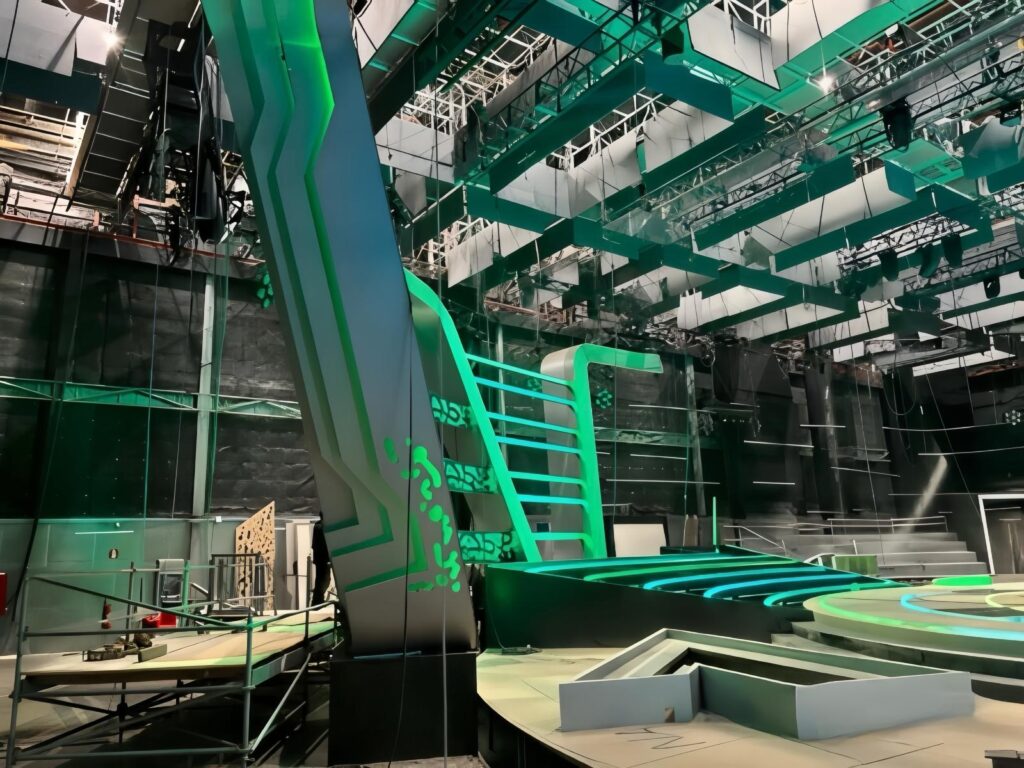
Mas Acoustics, acoustic treatment for TV/filming studios.
If you want acoustic treatment with guaranteed safety and audio quality for your TV or filming studio, do not hesitate to contact us. Take advantage of our consulting services and extensive experience to plan every detail, while also saving on costs in the process.
For any other questions you may have, do not hesitate to contact us and receive individualized assessment.